




Promotion of Sustainable Procurement
- Our Approach to Sustainable Procurement
- The Fundamental Policy for Sustainable Procurement
- Kewpie Group Supplier Guidelines
- Sustainable Procurement of Eggs
- Sustainable Procurement of Vegetables
- Sustainable Palm Oil Procurement
- Sustainable Paper Procurement
- Sustainable Fruit Sourcing
- Approach and Activities Regarding Animal Welfare
Our Approach to Sustainable Procurement
We have a strong commitment to raw materials, believing that "Good products begin with good ingredients" However, nowadays, we must consider not only quality but also the impact on the environment and human rights. We believe that working on this together with our business partners will lead to increased sustainability and the procurement of high-quality raw materials.
The Fundamental Policy for Sustainable Procurement
- 1. We will conduct all trade in compliance with the law and in conformity with international rules and norms while taking strong measures against corrupt practices.
- 2. We will engage in fair and ethical trade and use appropriate procedures in managing confidential information and intellectual property.
- 3. We will protect human rights and refrain from discriminatory language or conduct, inhumane treatment, or any involvement in human-rights abuses.
- 4. We will respect the labor rights of employees, adopting sound labor practices and providing a safe and clean work environment.
- 5. We will work to prevent pollution and environmental degradation at the local and global levels through the sustainable use of resources.
- 6. We will ensure sustainable access to safe, high quality raw materials, management will also take into account ecological impacts and animal welfare.
- 7. We will contribute actively to support the sustainability of the local communities where our ingredients are produced.
- 8. We will encourage our suppliers to adopt the foregoing policies.
- 9. We will report publicly on the progress of the foregoing policies as appropriate.
Adopted 2018, revised 2023
Kewpie Group Supplier Guidelines
In order to realize the "Kewpie Group the fundamental policy for sustainable procurement", we have established the "Kewpie Group Supplier Guidelines" as our request to our valued suppliers (meaning all suppliers including our business partners) who are the suppliers of the Kewpie Group. With these guidelines, we aim to achieve co-existence and co-prosperity with sustainable procurement and our suppliers by solving various issues in the supply chain based on mutual understanding.
キユーピーグループ サプライヤーガイドライン(638KB) Kewpie Group Supplier Guidelines (271KB)
Sustainable Procurement of Eggs
Fundamental Approach
Eggs are one of the key ingredients for our various products including mayonnaise and processed egg products in Kewpie Group. We recognize that quality and influence on environment of eggs, concern on human rights and animal welfare for laying hens are critical challenges.
We, Kewpie Group are making efforts to build cooperation with domestic egg producers by hearing their opinions and conveying our customers' feedbacks to lead mutual growth and development.
Besides, we keep trying to enhance the value of eggs in our value chain including our customers through our products and service, continuously making progress the initiatives for lowering environmental loads on eggs.
Furthermore, we actively join the communications and initiatives with government committees, academic experts and advisers as well as supply chain partners including egg producers to increase the sustainability of egg-related industries.
Activities
Exchanging the quality specification agreement with our shell egg suppliers as well as visiting their facility in organized way to share our fundamental policy, we are working on the improvements together.
Additionally, by maximizing the excellent nutritional balance of eggs and enhancing the functions to construct various foods as well as "Contribution for Food and Health" and "Studies Against the Egg Allergy", we are working on the initiatives to solve social agendas regarding foods.
Bringing smiles to children through research addressing egg allergies!
We also working on sustainability lowering global environment load by effectively utilizing eggs without waste. For children, we provide dietary educations to deliver the excellence of eggs.
Sustainable Procurement of Vegetables
Kewpie Group offers salads and delicatessen foods made mostly from vegetable ingredients grown in Japan. We therefore consider the procurement of vegetable ingredients crucial to business continuity. Going forward, we will continue to communicate closely with producers to achieve the sustainable procurement of vegetables for Kewpie Group and the continued growth and development of the producers.
Activities
Circular Agriculture Development
At Salad Club, Inc., we have an initiative to utilize unused parts of vegetables, such as outer leaves and cores, generated at our seven directly managed factories when manufacturing packaged salads, by having them used as raw materials for compost or animal feed by contract farmers and other partners.
For contract farmers, this offers the advantage of access to inexpensive domestically produced compost, and the use of organic compost also minimizes the environmental impact. By using compost made from unused parts of vegetables to cultivate vegetables and manufacture products, a circular process is established that avoids wasting resources, leading to "zero vegetable waste."
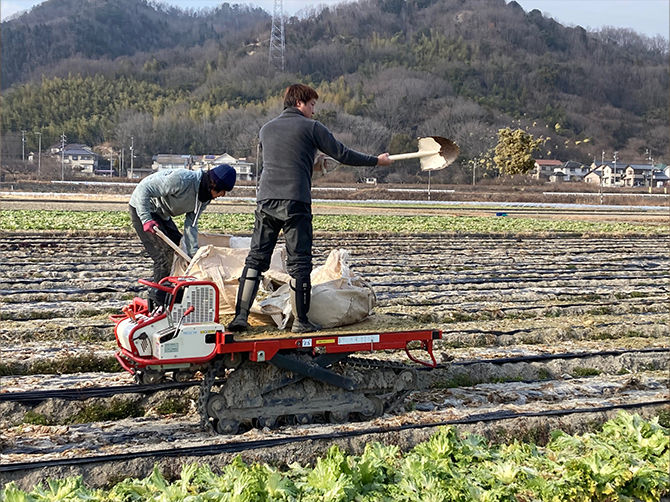
Scenes of compost spreading at contract farms
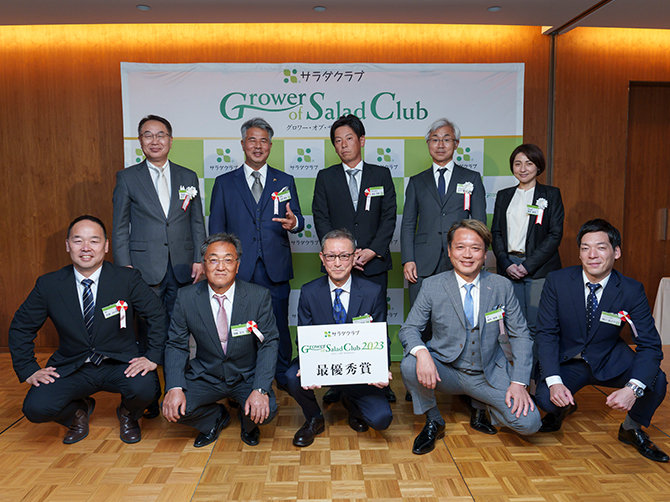
Salad Club, Inc. 's Awards Ceremony for Producers
The vegetables used by Salad Club, Inc. are sourced through "contract transactions" with approximately 400 contracted production areas nationwide, based on a relationship where we can see the faces of the producers. "Contract transactions" not only allow for a stable supply of raw materials at a fixed price, but also offer producers the advantage of being able to make strategic investments based on a stable income.
As part of our efforts to procure safety and reliability raw materials, factory members and raw material suppliers regularly visit farms. We also actively engage with local farmers by encouraging them to participate in factory tours, assist with harvesting, participate in factory training, and hold barbecues.
Every April, we recognize our contracted producers as "Grower of Salad Club." to express our gratitude to them. We evaluate the quality of key ingredients and award "Grand Prize," "Excellence Award," and "Special Award" to our contracted producers.
On the other hand, we are also working with producers to build a circular agriculture system. We are expanding our connections by using unused vegetable parts generated during the production of packaged salads as feed and compost raw materials in our factory, and then having the compost used in agricultural areas.
Sustainable Palm Oil Procurement
Palm oil is a vegetable oil obtained from oil palms grown in tropical regions, but it has been noted that there are issues with the large-scale logging of tropical forests to develop these farms and the human rights of farm workers.
In order to avoid using raw materials with such problems and to contribute to solving these issues, the Kewpie Group joined the RSPO (Roundtable for Sustainable Palm Oil) in July 2018 based on the Kewpie Group's Basic Policy for sustainable procurement formulated in January 2018, and we will continue our Group's sustainable palm oil sourcing efforts.
Activities
In 2019, Kewpie Group began purchasing certification credits for palm oil procured by the RSPO using the Book and Claims method *1. By 2022, Kewpie Group had completed the transition to the Book and Claims method for all raw materials that are 100% palm oil. In addition, the company obtained certification for accepting palm oil using the Mass Balance method *2.
*1Book and claim system
RSPO issues certification credits (securities) for certified oils produced by producers certified by RSPO.
This system supports certified palm oil producers by allowing them to purchase certification credits.
*2Mass balance system
This certification model involves certified palm oil being mixed with other uncertified palm oils during the manufacturing and distribution process.
While it may physically contain uncertified oil, the amount of certified palm oil supplied from certified plantations is guaranteed.
Sustainable Paper Procurement
In December 2023, Kewpie established Kewpie Group Paper Procurement Guidelines, setting standards and targets.
We are committed to sourcing paper and paper products from businesses that do not contribute to new deforestation during the raw material procurement process, adhere to the laws and regulations of the timber production areas and international human rights standards, and produce the materials through appropriate procedures.
Therefore, we aim to procure paper and paper products that are primarily forest certified paper (such as FSC® certified *), and paper products that we have confirmed are made from raw materials that do not contribute to new deforestation or human rights abuses by our suppliers.
*An international forest certification system that recognizes responsibly managed forests and forest products that are appropriately sourced to ensure the continued use of limited forest resources for future generations.
Activities
Sourcing and using sustainable paper, such as FSC® certified paper.
Kewpie Group promotes the procurement and use of sustainable paper, including FSC® certified paper produced from forests managed with consideration for the environment and society.
By fiscal year 2025, we will achieve a 100% sustainable paper procurement rate for all containers, packaging materials, printed booklets, promotional materials, and office supplies across our domestic group. Going forward, we will continue to use materials that consider the conservation of forest resources and contribute to the realization of a sustainable society.
Ingenious Cardboard Construction
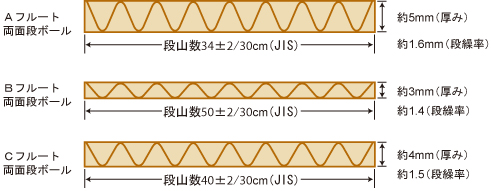
By improving the corrugated cardboard structure and making it thinner while maintaining strength, we are working to reduce the amount of paper used.
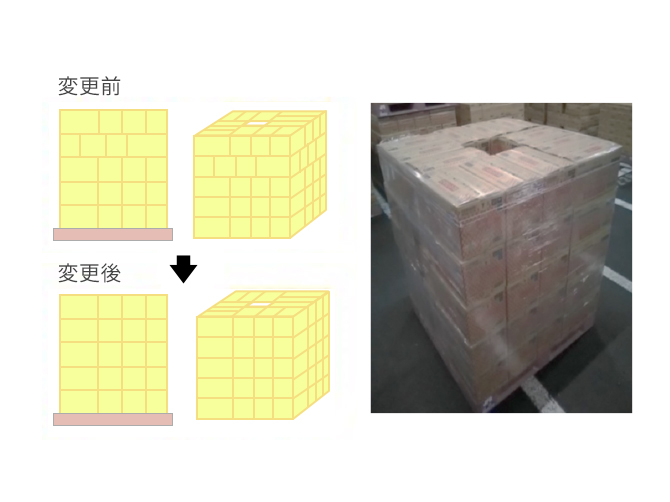
Innovations in Pallet Stacking Methods
We have changed the pallet stacking method used for our main mayonnaise product during transportation. By adopting a stacking method that takes advantage of the properties of cardboard, we have reduced the amount of material used and achieved a reduction in environmental impact by reducing the amount of recycled paper material.
Resource Conservation Efforts in Packaging
At Aohata Corporation, we have adopted "shelf-ready packaging" for our 55 Jam UD150 series and Calorie Half series, resulting in an annual reduction of approximately 50 tons of cartons. In addition, in 2022, we changed the carton liner* used for Verde Toast Spread series, achieving weight reduction of the cartons and a reduction in CO2 emissions during carton manufacturing while maintaining the same strength as before.
| Annual usage for fiscal year 2025 | 240,000 sheets |
|---|---|
| Weight reduction | 4,300kg/year |
| CO2 reduction during carton manufacturing | 2,800kg/year |
*Liners are the corrugated cardboard base paper used on the front and back surfaces of corrugated cardboard
Innovations in Carton Shape
"AOHATA 55" (small size) carton*
We modified the flap dimensions of the carton to promote resource conservation.
*Started in 2015
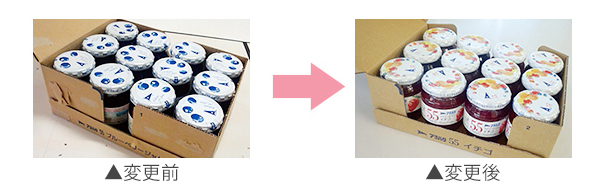
At the same time, we implemented a "Pop Carton" for easy opening and displaying, improving work efficiency at stores.

Sustainable Fruit Sourcing
At Aohata Corporation, guided by the strong belief that "Good products begin with good ingredients" principle passed down since our founding, we are committed to sustainable raw material procurement in collaboration with farmers and frozen primary processing suppliers around the world. As the environment surrounding fruits becomes increasingly challenging due to the effects of climate change, we aim for sustainable procurement by consistently conducting research on cultivation techniques, from breeding and seedling cultivation to cultivation techniques, within our group, with a focus on strawberries, our main raw material.
<China: Strawberry breeding and seedling cultivation> Developing and selling proprietary varieties.
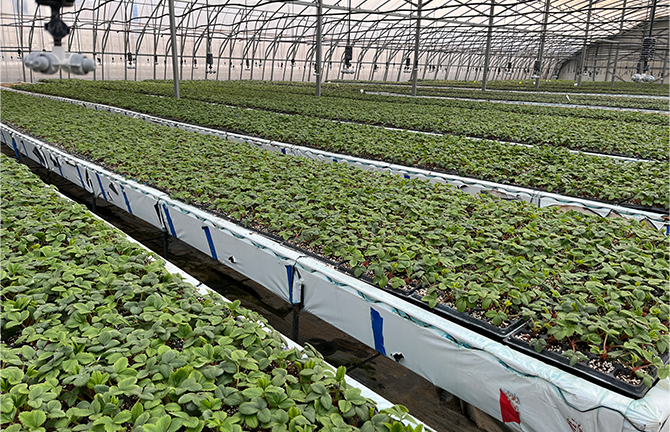
Seedlings before shipment
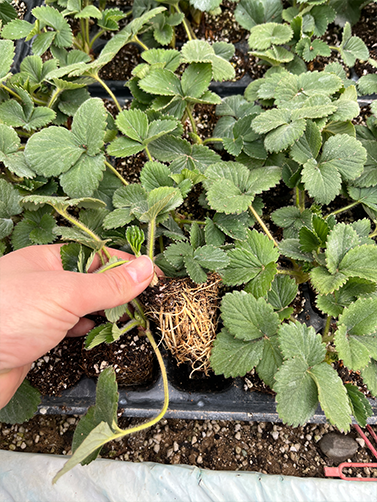
<Japan: Research on Strawberry Cultivation Techniques> At Aohata Corporation Fruit Research Institute (Miyoshi City, Hiroshima Prefecture), a large number of strawberry varieties are being cultivated and research on cultivation techniques is being conducted.
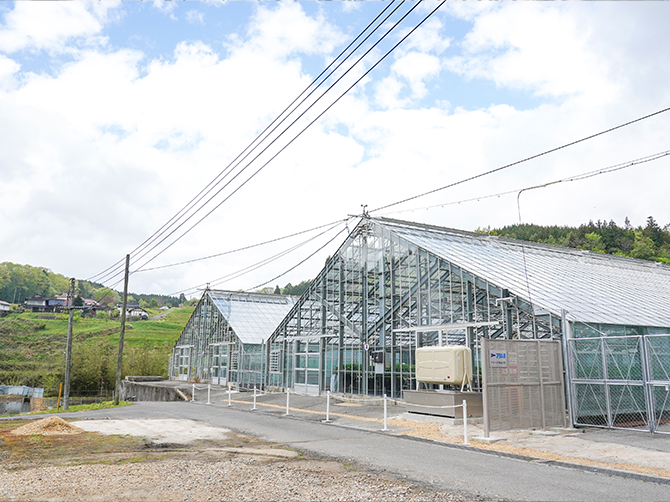
Aohata Corporation Fruit Research Institute
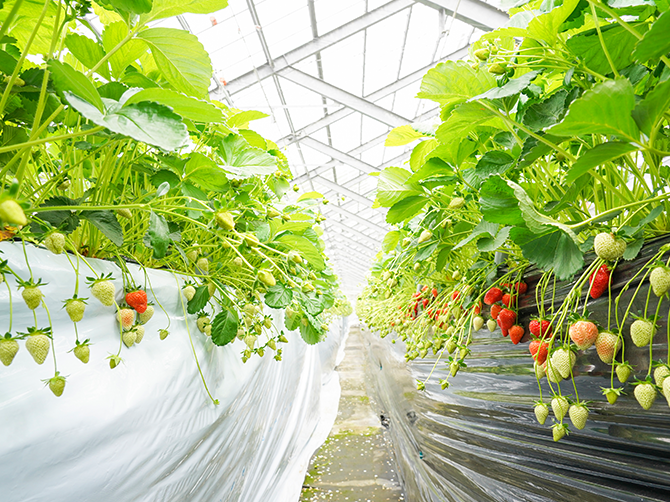
Aohata Corporation Fruit Research Institute: Strawberry Cultivation Process
Approach and Activities Regarding Animal Welfare
Fundamental Approach
As a company, the Kewpie Group recognizes the welfare of laying hens as a critical factor in the sustainable production and procurement of eggs.
We support the Five Freedoms* of animal welfare outlined by the World Organisation for Animal Health (WOAH) and believes that raising laying hens in alignment with these principles is crucial. As eggs are a cornerstone of our business, we believe it is our responsibility to respect the dignity and well-being of laying hens throughout their lives.
*The five freedoms in principles for animal welfare
- Freedom from hunger, malnutrition and thirst
- Freedom from fear and distress
- Freedom from heat stress or physical discomfort
- Freedom from pain, injury and disease
- Freedom to express normal patterns of behaviors
Activities
Japan Domestic
- We have confirmed that eggs we procure are from hens that are raised in accordance with “Animal Welfare Guidelines for Laying Hens”*1. We are also proceeding verification of compliance with the “Technical Guidelines for Management of Laying Hens”*2, established by MAFF.
- We recognize necessities of production expansion of cage-free *3eggs, supporting domestic shell egg producers and making efforts to promote, as well as working on developing and expanding market.
- With government and poultry supply chain partners, as well as academic experts, specialists, NGO/NPO related parties, we cooperate and discuss about how sustainable ways of husbandry and management of laying hens are supposed to be.
Overseas
- We procure eggs from hens raised in accordance with regulations and social environment in each country or area.
- As for cage-free eggs, we procure eggs from hens raised in accordance with regulations in each country or area. Furthermore, we provide products to respond customer’s needs and requests in each business territory.
Livestock Products except Eggs
- We steadily proceed to confirm the way of husbandry concerned for animal welfare referring “Technical Guidelines for the Husbandry and Management” for each livestock species established by MAFF.
Action Goal
Global Products
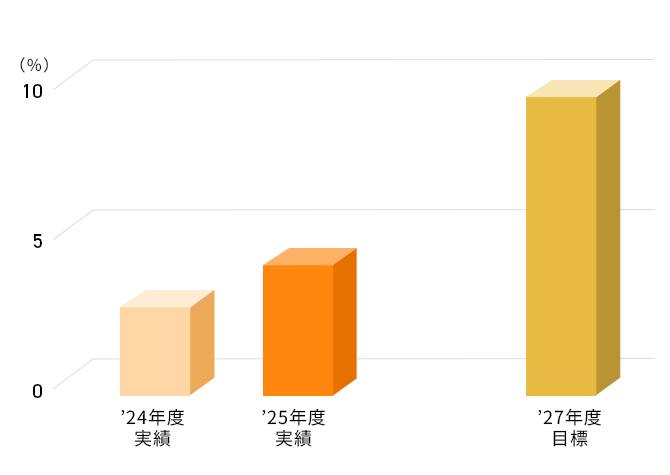
- We raise percentage of cage-free egg application for our globally produced and sold KEWPIE MAYONNAISE from 3% at the end of 2023 to 10% at the end of 2027.
Japan Domestic
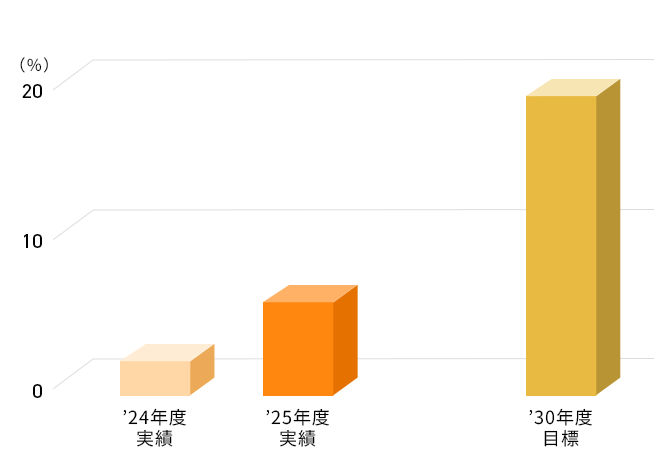
- We procure cage-free eggs equivalent to 20% of eggs used for domestically produced and sold KEWPIE MAYONNAISE by 2030.
The United States and Europe
- In the United States, we set the goal to switch all eggs procured and used to be cage-free eggs by 2025, which had been achieved in 2022.
- In Europe, we set the goal to switch eggs for the production of Kewpie brand products to cage-free eggs by 2025, which had been achieved in 2025.
We are also struggling to expand procurement of cage-free eggs in Asian countries however, we will proceed consideration through exchanging information and ideas with suppliers and relevant parties, as it is still difficult to secure in the area.
Our Efforts and Actions Taken in 2025
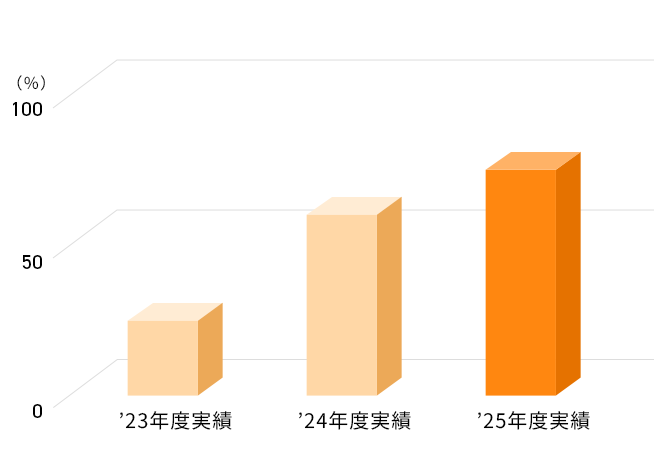
国内で調達する鶏卵生産者の訪問
監査実績(調達量ベースの累計)
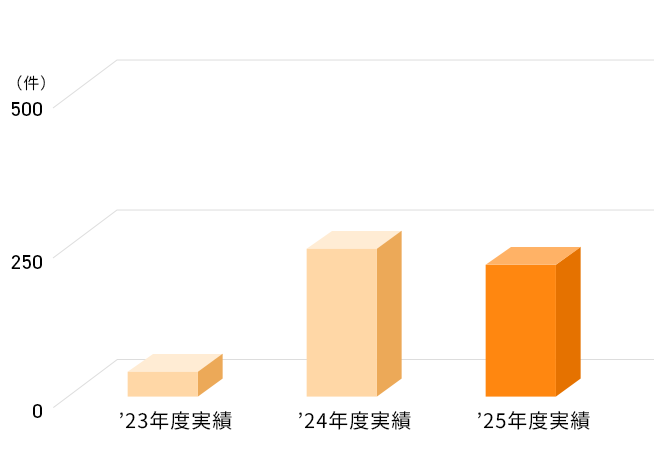
お取引先へのケージフリー飼養卵の
商品提案商談の件数(単年度)
グローバルで製造販売しているキユーピー
マヨネーズのケージフリー飼養卵の使用率
Domestically procuring cage-free egg volumes shown in equivalence to percentage of egg used for domestically produced and sold KEWPIE MAYONNEAISE. Target to reach 20% in 2030.
(国内で製造販売するキユーピー マヨネーズに使用する
卵の20%にあたる量を調達)
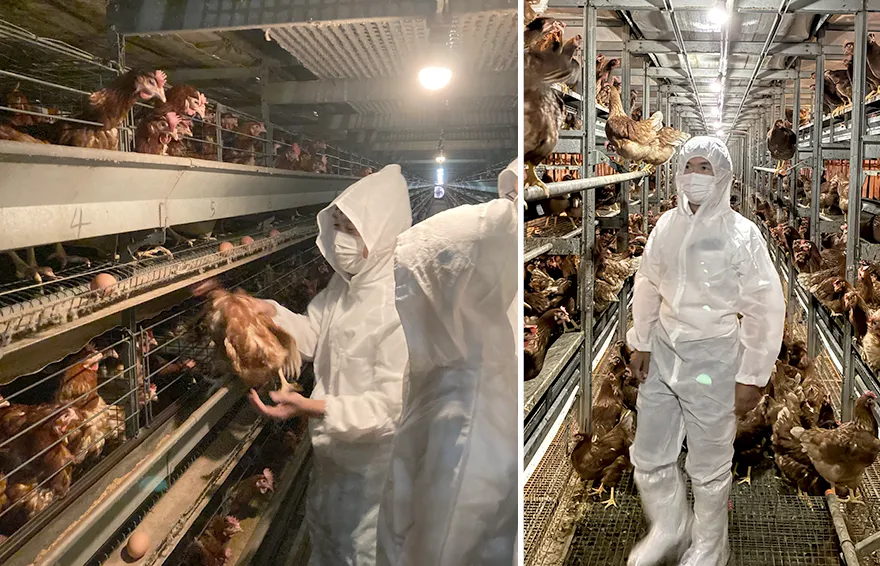
We continue hearing survey based on compliant survey slip for “Guidelines for husbandry and management” to all of domestic shell egg suppliers whom our group procure from.
We concur and are positively participating in “The Association's Views and Policy on Animal Welfare for Laying Hens” established by Japan Association of Mayonnaise & Dressings which we affiliate with.
全国マヨネーズ・ドレッシング類協会 採卵鶏のアニマルウェルフェアについての協会の考え方と取組方針
(Revised in January 2026)
*1The 5th Edition (March 2020) of the Animal Welfare Guidelines for Laying Hens, published by the Japan Livestock Technology Association (Public Interest Incorporated Association).
*2The Technical Guidelines for Management of Laying Hens (No. 1066, Livestock Division, July 26, 2023), established by the Ministry of Agriculture, Forestry and Fisheries (MAFF).
※3Breeding style of cage-free farm
In“1.(2) General principles of farm animal management corresponding to the concept of animal welfare” of “Promotion of farm animal management based on the international standards for animal welfare in the Terrestrial Animal Health Code of the World Organization for Animal Health” (Notification from MAFF Director-General of Livestock 5 Livestock No. 1062, July 26, 2023,) livestock keepers should understand the “Five Freedoms” which are the principles of animal welfare, and continuous efforts through proper husbandry management such as daily observation and recording, careful handling, and provision of high-quality feed and water. It is said that it is necessary for all concerned parties to fully recognize that this is a matter of making improvements and that it cannot be achieved by simply installing specific facilities and equipment, and to promote this.