










Quality Assurance System
Food Safety and Quality Policy
We will adhere to Code of Conduct, "Quality-First," and promote the establishment of a "TPA (Total Process Assurance) System" for each of our products.
Behavioral Guidelines
- 1.Compliance with customer requirements, relevant laws and regulations, and internal rules. [Rule compliance]
- 2.Regular review and continuous improvement of the food safety management system. [Improvement]
- 3.Stakeholder communication activities [Communication]
- 4.Acquisition and pursuit of the knowledge and skills necessary to guarantee food safety and quality [Competency]
TPA (Total Process Assurance) System Through "Heart, Mechanism, and Technology"
The entire Kewpie Group is working to build a "TPA (Total Process Assurance) System" from the perspectives of "heart," "mechanism," and "technology."
Our "TPA (Total Process Assurance)" means a system that "prevents abnormalities and problems from occurring" and "even if they do occur, we will notice them ourselves and prevent their shipment," allowing us to provide products that our customers can trust.
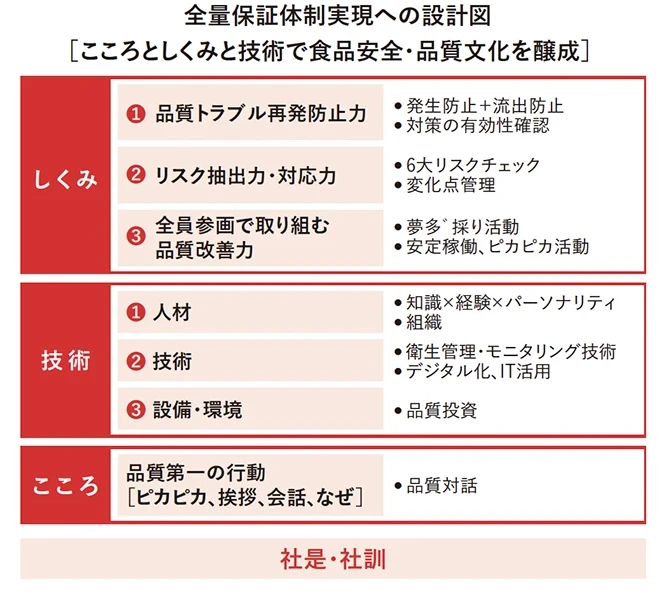
Heart (Quality-First actions)
Under Quality-First above all else, we strive to improve the quality of all our activities, including providing safety and reliability products, in order to earn the trust of our customers and foster a food safety and quality culture.
We strive to create an open and communicative workplace where employees can feel comfortable speaking up when something seems wrong, by fostering communication through greetings, conversations, and dialogues with their colleagues.
Mechanism (Risk Management And Prevention of Recurrence)
Ability to Prevent Recurrence of Quality Problems
We share quality troubles and risks that our group has experienced in the past, and we are working on preventative activities from both "preventing occurrence" to avoid similar troubles from happening again, and "preventing shipment" to prevent problems from spreading to subsequent processes if they do occur.
We hold regular group quality management meetings to promote and review our initiatives.
Risk Identification and Response Capabilities
Introduction of Third-party Certifications for Food Safety (FSSC22000, etc.)
We have obtained international third-party certification for food safety, known as the GFSI Approval Scheme *, at all of our group's factories.
By undergoing regular audits by external organizations, we objectively review and improve our quality assurance efforts, thereby ensuring the continuous maintenance and improvement of food safety and quality levels.
*This refers to certification standards approved by the non-profit organization "GFSI (Global Food Safety Initiative)," established in May 2000, as meeting food safety standards. FSSC 22000, originating in the Netherlands, and SQF, originating in the United States, are also included in this GFSI approval scheme.
Quality Improvement Capabilities Through the Participation of All Employees
"Waku-waku Award"
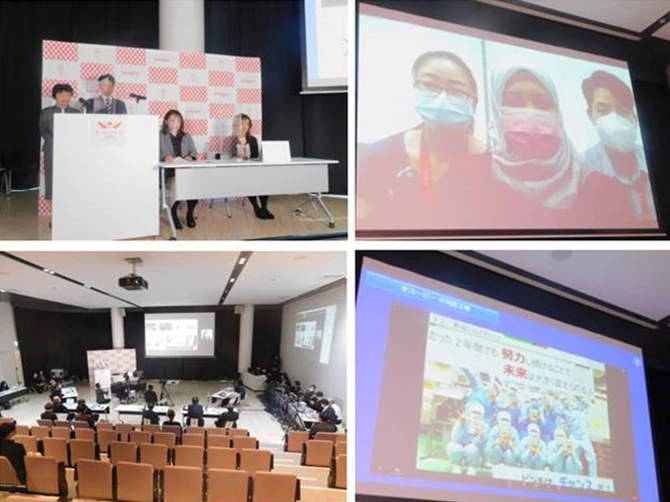
Kewpie Group is committed to "quality improvement activities that lead to smiles from customers and employees," and holds the "Waku-waku Award" every year as a forum to share the results of these efforts.
Through a team carefully selected from both within Japan and overseas, we will share improvement activities and use them to further enhance the unique operational and product quality of the group.
"Pica Pica Activities" "Mudatori Activities"
As part of the group's unique quality improvement initiatives, we are implementing the "Pica Pica Activities", which visualizes normal and abnormal conditions in the manufacturing site, and the "Mudatori Activities", a quality improvement initiative in which all employees participate.
Technology (Human Resource Development, Production Technology and Analytical Technology)
Human Resource Development
"Monodukuri Gakko"
We have established a learning program called "Monodukuri Gakko Quality Course" for all personnel in production departments involved in the manufacturing of our products.
We have a curriculum in place that allows participants to systematically learn product quality control from the basics to advanced levels. Upon completion, members further hone their skills in their respective departments and strive to improve the quality assurance system.
By building upon the learning and practical experience of each individual, we aim to create products that support safety and reliability of our customers, and to improve the overall quality of the group.
Production Technology (Safety and Reliability)
We are undertaking smart factory initiatives aimed at improving productivity and quality assurance. By introducing machinery and robots into our production processes, we are increasing production efficiency, creating more free time for our production staff, and ultimately contributing to quality improvement.
Furthermore, we are working to establish a real-time quality assurance system during production by utilizing digital technologies.
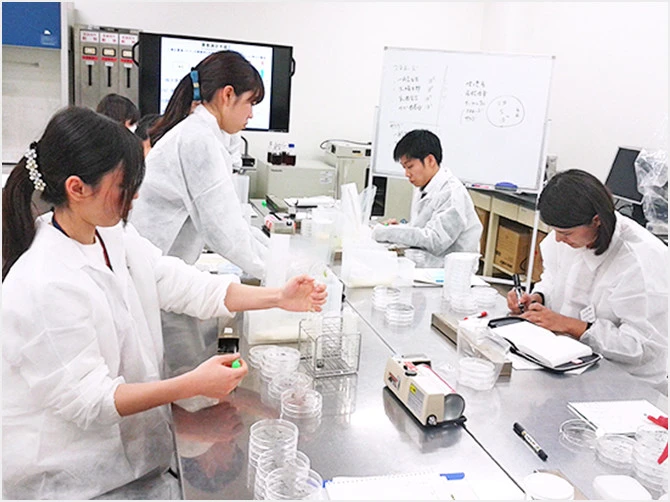
Analytical Techniques (Food Safety Science Center)
Kewpie Group has established a "Food Safety Science Center" to support food safety based on analytical data. In order to deliver safety and reliability products to our customers, we work in cooperation with the quality assurance departments of each factory to conduct physicochemical analysis and microbiological testing of products and raw materials.
Analysis of hazardous substances (chemicals, microorganisms, foreign matter)
To ensure the safety of our raw materials and products, we conduct regular inspections for residual pesticides, veterinary drugs, allergens, and radioactive materials. If microorganisms or foreign substances are detected in our processes or products, we conduct analyses to determine what they are and where they originated in order to assess customer safety and whether they will affect other products.
1. Extraction and preparation of components
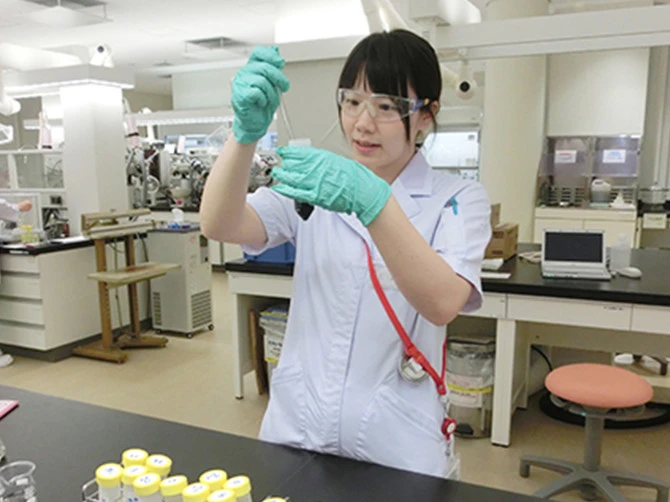
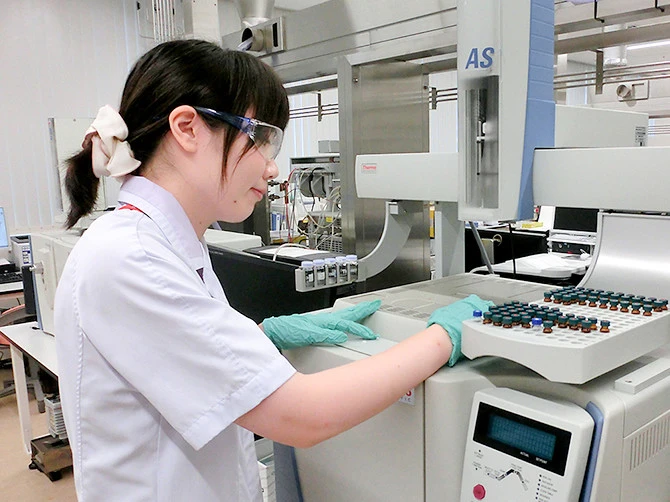
2. Measurement using analytical instruments
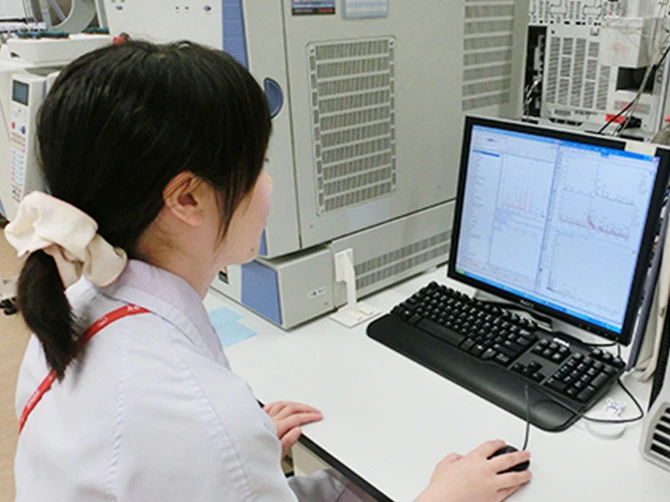
3. Analysis of the results
Quality Evaluation Initiatives
The main ingredients of mayonnaise, oil and eggs, are processed agricultural and livestock products, and their supply and quality can change due to changes in production conditions such as droughts and extreme heat, as well as changes in processing. By conducting our own analysis, we can identify changes in quality and work with our suppliers to ensure the sustainable procurement and use of raw materials.
Introduction of New Technologies
Technology for identification of microorganisms* in food has advanced rapidly in recent years. Previously, identification of microorganisms involved isolating and culturing them from food, then observing them under a microscope to examine their characteristics, a process that took 7 to 10 days. With the advent of gene-based methods, this process was reduced to 1 to 2 days, and now, by examining proteins characteristic of the microorganism, it can be shortened to 30 minutes.
In response to these technological changes, we are actively introducing effective methods and working with external organizations to develop new technologies.
*Identifying the type of microorganism.
Overview of Quality Assurance and Quality Improvement Initiatives
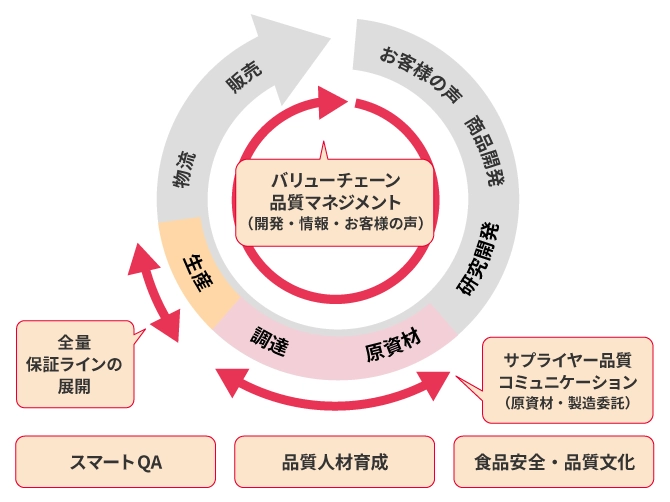
Kewpie Group operates under the principles of "Those who make food should be honest and sincere" "Good products begin with good ingredients" and has established "TPA (Total Process Assurance) System" throughout its entire value chain. The core of our quality management lies in "customer feedback." Each process, from research and development to procurement, production, and sales, is closely coordinated, and through the use of digital technology and human resource development, we strive to improve the value we deliver to our customers every day and cultivate an unwavering food safety and quality culture.