










Social Contribution Activities
Our Approach to Social Contribution Activities
As a company involved in food, which is indispensable to people's lives, Kewpie Group aims to contribute to the realization of healthy and fulfilling lives.
To that end, we are engaged in social contribution activities aimed at better coexistence with local communities, based on the pillars of "being able to continue for a long time," "being useful to many people," and "being rooted in the community." In particular, we are carrying out various activities that contribute to the development of the region through collaboration with local governments and local NGOs and NPOs.
QPeace Donation-Matching Scheme
The Kewpie Group introduced the QPeace donation-matching scheme in fiscal 2008 to encourage employees to donate to organizations addressing social issues. Recipient organizations are selected by a volunteer selection committee based on employee recommendations. In fiscal year 2024, 26 group companies participated, making donations to 10 social and environmental organizations focusing on the themes of "children," "environment," and "food." This program aims to encourage employees to take an interest in social issues.
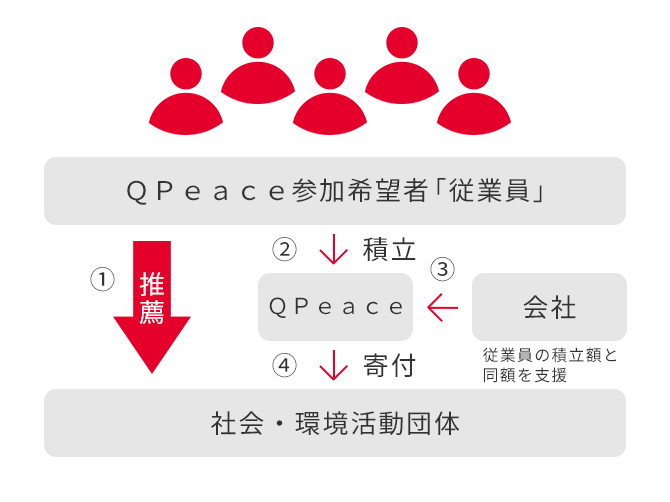
How the QPeace Scheme Works
- 1.Employees recommend organizations they wish to support. A project team of employees and the secretariat review the recommended organizations and make a decision.
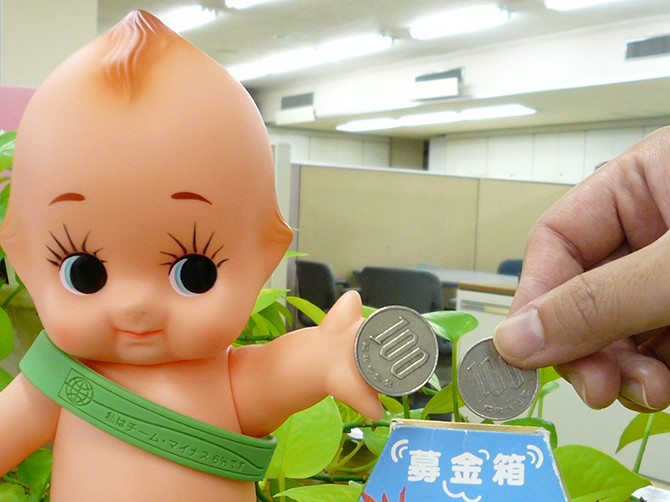
- 2.Employees who wish to donate can have 100 yen deducted from their salary each month, which will be accumulated in QPeace.
- 3.The company will provide support equal to the amount of the employees' savings.
- 4.Donations to various social and environmental organizations
Collaboration with the Local Community
Kewpie Group will work in collaboration with various local governments to address local community issues and revitalize local areas.
Comprehensive Partnership Agreements
| When signed | Partnering municipalities | Objectives and major initiatives |
|---|---|---|
| March 2026 | Okayama City, Okayama Prefecture | Promoting increased vegetable intake and better health among Okayama citizens |
| December 2024 | Osaka Prefecture | Promotion of health and well-being for residents of Osaka Prefecture |
| September 2023 | Nishio City, Aichi Prefecture | Promoting health improvement and regional revitalization through initiatives such as local production and consumption. |
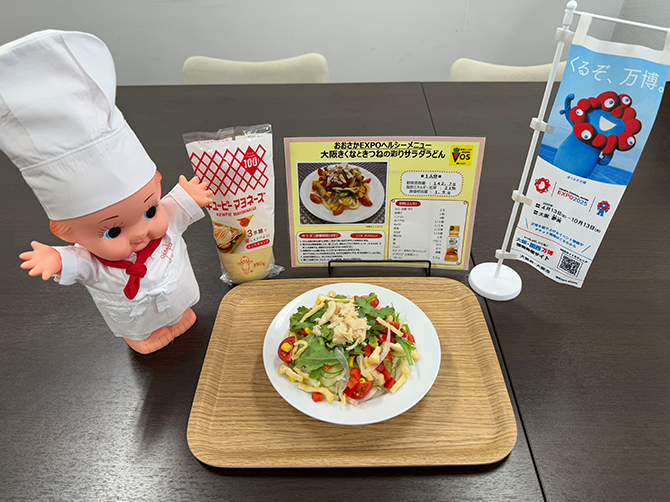
| April 2023 | Tsuchiura City, Ibaraki Prefecture | Tsuchiura City Lotus Root Salad Project Promotion |
| March 2021 | Fuchu City, Tokyo | Regional agreement on collaboration toward achieving net-zero carbon dioxide emissions by 2050 |
| February 2019 | Yamagata Prefecture | Promoting regional revitalization with the aim of revitalizing the region and improving the quality of life for citizens. |
| March 2018 | Hiroshima City, Hiroshima Prefecture | Promoting regional revitalization with the aim of revitalizing the region and improving the quality of life for citizens. |
| December 2016 | Shibuya Ward, Tokyo | Promoting new initiatives with the aim of solving problems in the local community. |
| March 2015 | Kobe City, Hyogo Prefecture | Agreement on the Use of the Facility as an Emergency Shelter from Tsunamis |
Examples of Salad-First Initiatives in Collaboration with Local Governments
Based on the "with vegetables" concept, which encourages people to naturally consume vegetables, Kewpie Group proposes salads in various forms in collaboration with local communities, incorporating local production and consumption, eco-friendly recipes, and health-related suggestions.
Asahikawa City, Hokkaido
An initiative to create salads using sweet potatoes from Asahikawa.


Shizuoka Prefecture
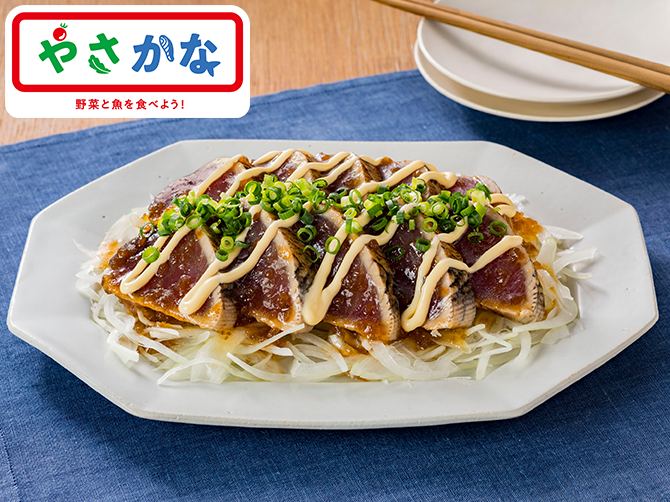
To expand fish menu options and address insufficient vegetable intake
"Yasakana" Project
Hiroshima Prefecture
Hiroshima Salad made with Komatsuna (Japanese mustard spinach) from Hiroshima Prefecture

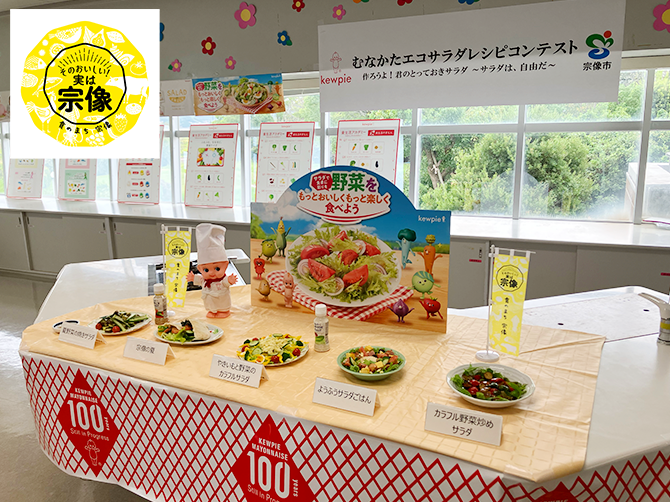
Munakata City, Fukuoka Prefecture
An initiative to create eco-friendly salads using unused parts of vegetables.
Clean-up Activities
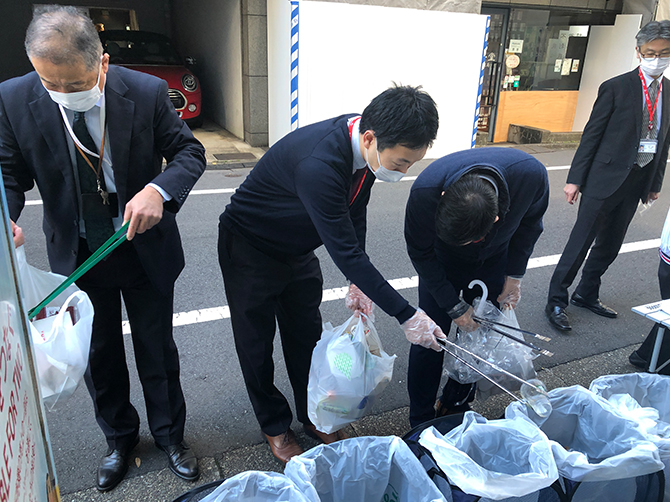
Each of our business locations conducts voluntary cleanup activities around its premises as part of its environmental beautification efforts. We also participate in regular cleanups of nearby rivers and shopping streets. These initiatives are also featured on the "Kewpie Group Official Blog."
Aohata Corporation Adopt-a-Product Program
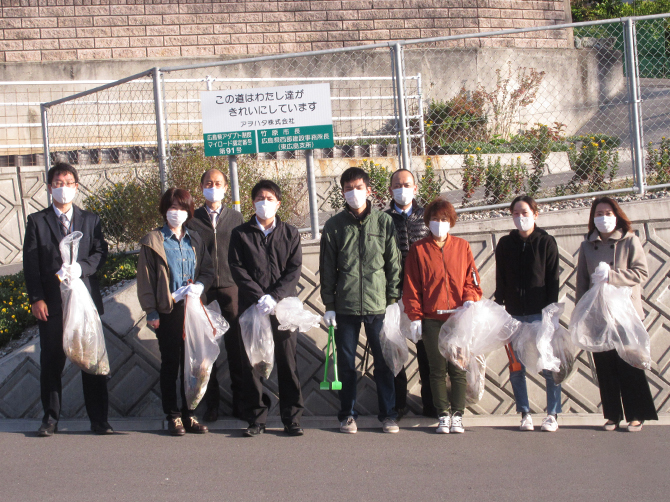
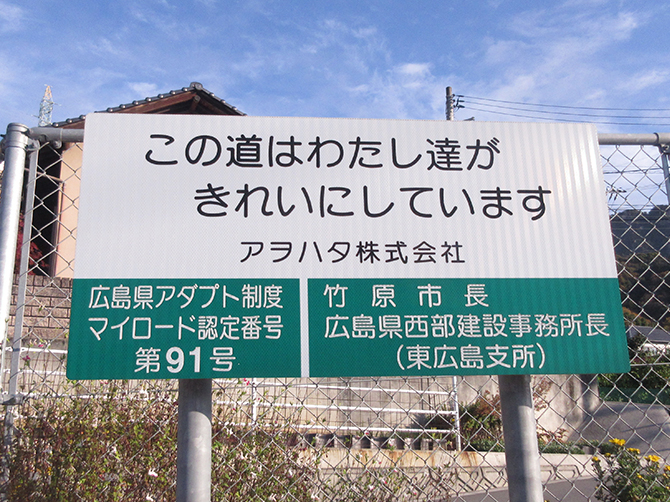
Aohata Corporation has a comprehensive partnership agreement with Hiroshima Prefecture, and one of the areas they work on together is "environmental measures and recycling." One example of this is their participation in the Adopt-a-Road program * for prefectural roads. In 2013, they were certified as an Adopt-a-Road program certified organization by Hiroshima Prefecture and have continued their activities ever since.
Aohata Corporation conducts cleaning activities four times a year on the road in front of JR Tadami Station, where the company headquarters is located (Higashihiroshima Hongō Tadami Prefectural Road), and a sign that reads "Aohata Corporation" is installed on that road.
Each time, there isn't a huge amount of trash, but it usually consists of empty cans, plastic bags, and cigarette butts. In addition to picking up trash, I also remove weeds growing on the sidewalk.
Through these activities, you can feel a connection with the community, such as receiving greetings and thanks from local residents.
We will continue our Adopt-a-Space activities to ensure that not only our employees but also the local community can enjoy a pleasant environment.
*"Adopt" comes from the English word meaning "to adopt something," and refers to an activity where a designated public area is treated as an adopted child, and citizens lovingly care for it (by cleaning, mowing the grass, etc.) as if it were their own child.
Community Contribution Activities Overseas
KEWPIE (THAILAND) CO., LTD. conducts contribution activities aligned with four themes: "community healthcare," "education," "sustainability," and "local communities."
Key initiatives
- Donations to projects supporting hospitals
- Expanding support activities such as university projects and scholarships.
Furthermore, some of these activities have been recognized and have received the following external evaluations.
CSR AWARD 2025
The Ministry of Social Development and Human Security of Thailand (MSDHS) recognized its contributions to social welfare and building a sustainable society, and it was recognized as an outstanding CSR organization.
LESS (Low Emission Support Scheme) Certification
We were awarded a certificate of recognition for our contribution to reducing and absorbing greenhouse gases through our continuous tree-planting activities.
Other Initiatives for Better Society
Cultural Contribution
Through artistic and cultural activities such as singing and dancing, we support healthy and joyful lives for all generations.
Mother's Chorus
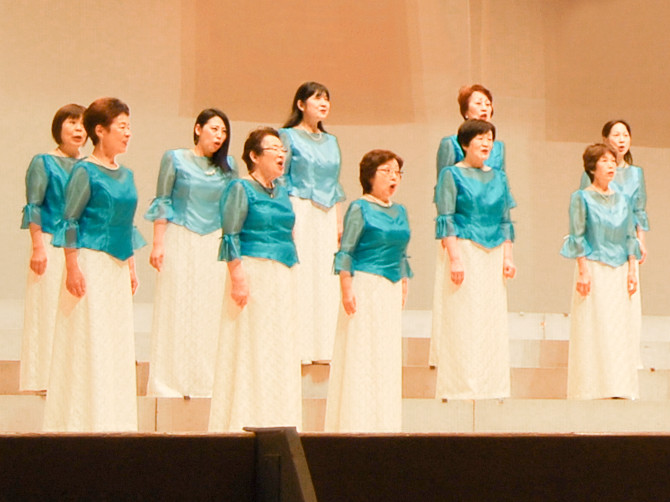
Kewpie sponsors the "JCA Mothers' Chorus Festival (organized by the Japan Choral Association [JCA] and the Asahi Shimbun Company)" and the "Okinawa Mothers' Chorus Festival (organized by the Okinawa Mothers' Chorus Association and the Ryukyu Shimpo Co., Ltd.)."
These festivals are designed to give mothers, who are usually busy with housework and work, the opportunity to fully experience the joy of choral singing.
We support mothers who are supporting the smiles and health of their families.
JCA Mothers' Chorus Festival
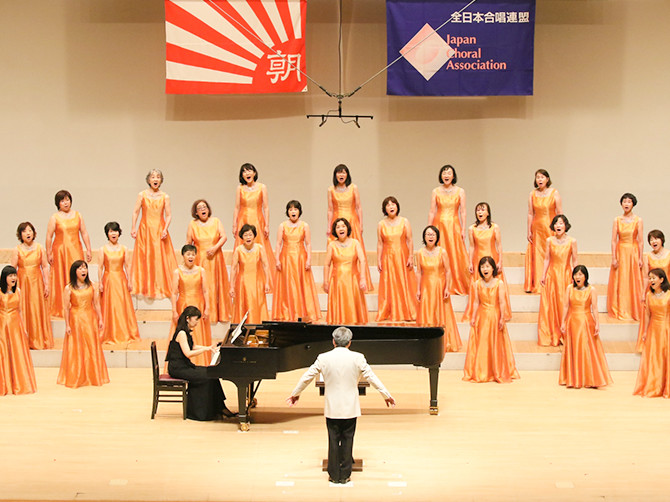
Every year, branch competitions are held throughout Japan, becoming large-scale events with approximately 700 participating groups. Around 60 groups are selected from these to compete in the national festival held in major cities across the country, where they showcase the results of their daily practice. For housewives who enjoy choral singing, it's an indispensable opportunity to perform.
History of the Mothers' Chorus Festival
JCA Mothers' Chorus History of the Mothers' Chorus Festival began in 1978 as the "JCA Mothers' Chorus Festival," co-sponsored by the JCA and the Asahi Shimbun, based on the belief of then-chairman of the JCA, Mr. Kan Ishii, that "it is necessary for mothers to learn about the arts in order to create healthy families."
The first tournament saw participation from 232 organizations and approximately 10,000 people nationwide, and the national tournament was held successfully at Toranomon Hall (Tokyo) with 25 participating organizations. Since then, the number of participating organizations has steadily increased, and it has become a large-scale event with approximately 700 organizations participating in the regional branch tournaments held every year from March to July.
Past Events
| Year of event (Number of times) |
Venue | venue | History |
|---|---|---|---|
| 2025 (48th) | Yamagata Prefecture | Yamagin Prefectural Hall | ー |
| 2024 (47th) | Hokkaido | Sapporo Concert Hall Kitara | ー |
| 2023 (46th) | Hyogo Prefecture | Acrier Himeji | ー |
| 2022 (45th) | Tokyo | Showa Women's University Hitomi Memorial Hall | ー |
| 2021 (44th) | Shizuoka Prefecture | Act City Hamamatsu Grand Hall | Canceled to prevent the spread of COVID-19. Online event "Mother's Chorus Online Festival 2021" held. |
| 2020 (43rd) | Miyazaki Prefecture | Medikit Prefectural Cultural Center | Canceled to prevent the spread of COVID-19. An online "Virtual Mothers' Chorus" will be held. |
| 2019 (42nd) | Ishikawa Prefecture | Kanazawa Opera House | ー |
| 2018 (41st) | Ehime Prefecture | Himegin Hall | ー |
| 2017 (40th) | Okayama Prefecture | Okayama Symphony Hall | ー |
| 2016 (39th) | Aomori Prefecture | Link Station Hall Aomori | ー |
| 2015 (38th) | Hokkaido | Sapporo Concert Hall Kitara | ー |
| 2014 (37th) | Niigata Prefecture | Ryutopia Niigata City Performing Arts Center | ー |
| 2013 (36th) | Osaka Prefecture | Festival Hall | ー |
| 2012 (35th) | Tokyo | Bunkyo Civic Hall Main Hall | To commemorate the 35th anniversary, the national tournament was held over three days. |
| 2011 (34th) | Fukuoka Prefecture | Acros Fukuoka | ー |
| 2010 (33rd) | Nagano Prefecture | Nagano Prefectural Citizens' Cultural Center Hokuto Cultural Hall | ー |
| 2009 (32nd) | Ehime Prefecture | Himegin Hall | ー |
| 2008 (31st) | Fukushima Prefecture | Koriyama Civic Cultural Center Main Hall | ー |
| 2007 (30th) | Tottori Prefecture | Tottori Prefectural Citizens' Cultural Center, Rika Hall | ー |
| 2006 (29th) | Hokkaido | Sapporo Concert Hall Kitara | ー |
| 2005 (28th) | Nagasaki Prefecture | Nagasaki Brick Hall Main Hall | ー |
| 2004 (27th) | Kanagawa Prefecture | Yokosuka Arts Theatre | ー |
| 2003 (26th) | Shiga Prefecture | Shiga Prefectural Arts Theater Biwako Hall | ー |
| 2002 (25th) | Tokyo | Tokyo Bunka Kaikan Main Hall | To commemorate the 25th anniversary, a national tournament was held over three days with the subtitle "Resonate, Moms in Tokyo!". |
| 2001 (24th) | Toyama Prefecture | Toyama City Arts and Culture Hall Overd Hall | ー |
| 2000 (23rd) | Kagawa Prefecture | Kagawa Prefectural Citizens' Hall Grand Hall | ー |
| 1999 (22nd) | Iwate Prefecture | Iwate Prefectural Hall | ー |
| 1998 (21st) | Okayama Prefecture | Kurashiki Civic Hall | As part of the federation's 50th anniversary celebrations, a "Chorus Jamboree" was held at Kurashiki Tivoli Park on the evening of the first day of the national convention. |
| 1997 (20th) | Hokkaido | Sapporo Concert Hall Kitara | ー |
| 1996 (19th) | Kumamoto Prefecture | Kumamoto Prefectural Theater Concert Hall | ー |
| 1995 (18th) | Gunma Prefecture | Gunma Music Center | ー |
| 1994 (17th) | Kyoto Prefecture | Kyoto Kaikan, Hall 1 | ー |
| 1993 (16th) | Ishikawa Prefecture | Kanazawa City Tourist Information Center | From this year onward, the national tournament was held over two days. |
| 1992 (15th) | Tokyo | Tokyo Metropolitan Theatre Main Hall | ー |
| 1991 (14th) | Ehime Prefecture | Ehime Prefectural Citizens' Cultural Hall Main Hall | ー |
| 1990 (13th) | Fukushima Prefecture | Koriyama Civic Cultural Center Main Hall | ー |
| 1989 (12th) | Hiroshima Prefecture | Hiroshima Kosei Nenkin Kaikan Hall | ー |
| 1988 (11th) | Hokkaido | Hokkaido Welfare Pension Hall | ー |
| 1987 (10th) | Fukuoka Prefecture | Fukuoka Sunpalace Main Hall | The first Boys and Girls Choir Festival was held concurrently. "Mother's Cantata," billed as another mothers' chorus competition, was also launched. |
| 1986 (9th) | Kanagawa Prefecture | Kanagawa Prefectural Hall | A large gathering of boys' and girls' choirs was held the day before. From this year onward, the host city rotated throughout the country. |
| 1985 (8th) | Osaka Prefecture | Festival Hall | ー |
| 1984 (7th) | Tokyo | Yūpōto Simple Insurance Hall | ー |
| 1983 (6th) | Aichi prefecture | Nagoya Civic Hall Main Hall | For the first time, the national tournament was held outside of Tokyo and the Kansai region. |
| 1982 (5th) | Hyogo Prefecture | Kobe Cultural Hall Main Hall | ー |
| 1981 (4th) | Tokyo | Fumonkan | ー |
| 1980 (3rd session) | Kyoto Prefecture | Kyoto Kaikan, Hall 1 | The name was changed to "All Japan Mothers' Chorus Competition". |
| 1979 (2nd session) | Tokyo | Tokyo Bunka Kaikan Main Hall | ー |
| 1978 (1st session) | Tokyo | Toranomon Hall | We held the "All Japan Mothers' Chorus" event, marking a significant first step towards establishing it as a continuing event. |
Okinawa Mothers' Chorus Festival
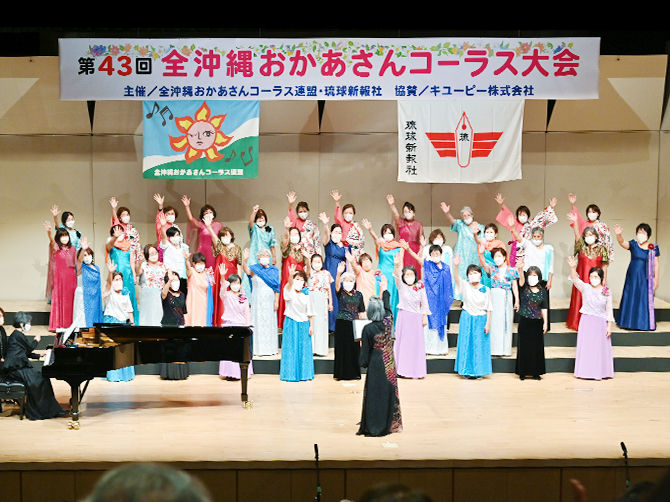
Okinawa Mothers' Chorus Festival started in 1979 with the core principle of "singing for fun." Initially, it was a small event on the scale of a recital, where groups would perform on stage, then go backstage to the audience to listen to the next group's performance. Over time, it expanded to various cities and towns, growing into a wonderful cultural activity that brings together people who love to sing. Now, the level of the choruses has risen, many Okinawan songs are sung, and it contributes to the popularization of Okinawan music.
History of the Okinawa Mothers' Chorus Festival
Based on the idea that "if there are mothers' volleyball teams, there should also be mothers' choruses," the Okinawa Mothers' Chorus Association's first chairman, the late Mr. Asataro Nakazato, former advisor Mr. Yokichi Hatoma, former chairperson Ms. Yuki Niijima, and Ms. Tamiko Shibata, a resident of Hyogo Prefecture, held a "Friendship Concert" by five groups at the Naha Central Community Center on February 14, 1979. This became the foundation of today's "Okinawa Mothers' Chorus Festival." On March 1, 1980, the "1st Naha Mothers' Chorus Festival" was held at the Ryukyu Shimpo Hall, with Mr. Kan Ishii, then chairman of the JCA, as an invited guest, marking a significant first step towards continuing the event. Subsequently, the scope of participating groups expanded from "Naha" to "the entire prefecture," and now, as a way to give back to member groups, choral workshops and instructor training courses are held regularly, striving to strengthen organizational cohesion and improve performance skills.
Past Events
| Year of event (Number of times) |
venue | History |
|---|---|---|
| 2025 (45th) | Ryukyu Shimpo Hall | ー |
| 2024 (44th) | Ryukyu Shimpo Hall | ー |
| 2023 (43rd) | Ryukyu Shimpo Hall | ー |
| 2022 (42nd) | Ryukyu Shimpo Hall | This event is being held for the first time in three years. It will also be streamed online simultaneously. |
| 2021 | Ryukyu Shimpo Hall | The event has been postponed to prevent the spread of COVID-19. |
| 2020 (41st) | Ryukyu Shimpo Hall | Canceled to prevent the spread of COVID-19. |
| 2019 (40th) | Ryukyu Shimpo Hall | ー |
| 2018 (39th) | Tomigusuku City Central Community Center | ー |
| 2017 (38th) | Tomigusuku City Central Community Center | ー |
| 2016 (37th) | Urasoe City Tedako Hall | ー |
| 2015 (36th) | Urasoe City Tedako Hall | ー |
| 2014 (35th) | Miyakojima City Matida Civic Theater | The name was changed to "Okinawa Mothers' Chorus Festival". |
| 2013 (34th) | Naha Civic Hall Main Hall | ー |
| 2012 (33rd) | Urasoe City Tedako Hall | ー |
| 2011 (32nd) | Urasoe City Tedako Hall | ー |
| 2010 (31st) | Naha Civic Hall Main Hall | ー |
| 2009 (30th) | Urasoe City Tedako Hall | ー |
| 2008 (29th) | Naha Civic Hall Main Hall | ー |
| 2007 (28th) | Naha Civic Hall Main Hall | ー |
| 2006 (27th) | Okinawa Convention Center Theater Building | ー |
| 2005 (26th) | Naha Civic Hall Main Hall | ー |
| 2004 (25th) | Okinawa Civic Hall Main Hall | ー |
| 2003 (24th) | Nago Civic Hall Main Hall | ー |
| 2002 (23rd) | Naha Civic Hall Main Hall | ー |
| 2001 (22nd) | Naha Civic Hall Main Hall | This is the first time the event will be held outside of Okinawa Island. |
| 2000 (21st) | Okinawa Convention Center Theater Building | ー |
| 1999 (20th) | Naha Civic Hall Main Hall | ー |
| 1998 (19th) | Naha Civic Hall Main Hall | ー |
| 1997 (18th) | Naha Civic Hall Main Hall | ー |
| 1996 (17th) | Okinawa Convention Center Theater Building | ー |
| 1995 (16th) | Okinawa Convention Center Theater Building | ー |
| 1994 (15th) | Okinawa Convention Center Theater Building | Created the league song and league flag. |
| 1993 (14th) | Okinawa Convention Center Theater Building | ー |
| 1992 (13th) | Naha Civic Hall Main Hall | ー |
| 1991 (12th) | Okinawa Civic Hall Main Hall | ー |
| 1990 (11th) | Naha Civic Hall Main Hall | ー |
| 1989 (10th) | Naha Civic Hall Main Hall | We will begin awarding prizes to groups that have participated 10 times. |
| 1988 (9th) | Naha Civic Hall Main Hall | ー |
| 1987 (8th) | Naha Civic Hall Main Hall | ー |
| 1986 (7th) | Naha Civic Hall Main Hall | ー |
| 1985 (6th) | Naha Civic Hall Main Hall | The name has been changed to "All Okinawa Mothers' Chorus Recital". |
| 1984 (5th) | Labor Welfare Hall, Main Hall | ー |
| 1983 (4th) | Labor Welfare Hall, Main Hall | ー |
| 1982 (3rd session) | Labor Welfare Hall, Main Hall | The name has been changed to "Naha Mothers' Chorus Recital". |
| 1981 (2nd session) | Ryukyu Shimpo Hall | ー |
| 1980 (1st session) | Ryukyu Shimpo Hall | The "1st Naha Mama's Chorus Festival" was held, marking a significant step towards establishing it as a continuing event. |
All Japan Elementary and Junior High School Dance Competition
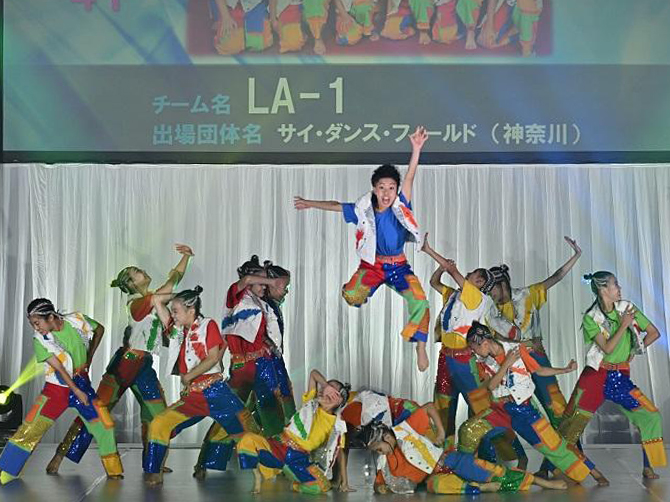
Provided by The Asahi Shimbun Company
Kewpie is a sponsor of the "All Japan Elementary and Junior High School Dance Competition (organized by the Asahi Shimbun Company)."
Rhythmic dance is incorporated into school education and club activities in elementary and junior high schools, and is highly anticipated in the educational field as a tool for improving basic physical fitness, as well as fostering a sense of rhythm, self-expression, creativity, and even communication skills. Kewpie will continue to support the healthy growth of children who work hard at dancing together with their friends, through food that is a source of energy.
The History of the All Japan Elementary and Junior High School Dance Competition
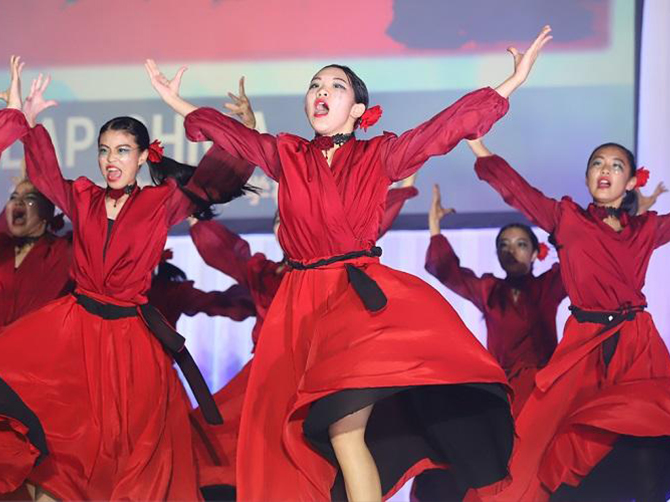
Provided by The Asahi Shimbun Company
This competition was founded in 2013 with the desire to "create a special stage for elementary and junior high school students to perform rhythm dances they have practiced with their friends in school classes and club activities," and to "nurture healthy bodies, rich expressiveness, and a spirit of working hard together with friends through dance."
The 13th tournament, held in 2025, saw a record-breaking 367 teams and approximately 4,800 participants. Of these, 50 teams, comprising about 700 elementary and junior high school students, who achieved particularly outstanding results in the regional tournaments, advanced to the national tournament, where they showcased the results of their training.
Past Events
| Year of event (Number of times) |
venue | History |
|---|---|---|
| 2025 (13th) | Yoyogi National Stadium Second Gymnasium | ー |
| 2024 (12th) | Yoyogi National Stadium Second Gymnasium | ー |
| 2023 (11th) | Yoyogi National Stadium Second Gymnasium | ー |
| 2022 (10th) | Yoyogi National Stadium Second Gymnasium | The regional tournament will be held for the first time in three years. |
| 2021 (9th) | Yoyogi National Stadium Second Gymnasium | Due to the spread of COVID-19, the regional competitions were canceled. The national competition and an online presentation will be held in November. |
| 2020 (8th) | ー | Due to the spread of COVID-19, all competitions were canceled. An online performance event, "All Japan Elementary and Junior High School Students DANCE LIVE 2020," was held instead. |
| 2019 (7th) | Komazawa Olympic Park General Sports Ground Gymnasium | ー |
| 2018 (6th) | Komazawa Olympic Park General Sports Ground Gymnasium | ー |
| 2017 (5th) | Kawasaki City Todoroki Arena | ー |
| 2016 (4th) | Kawasaki City Todoroki Arena | Tokai Tournament and Kyushu Tournament established. |
| 2015 (3rd session) | Yoyogi National Stadium Second Gymnasium | ー |
| 2014 (2nd session) | Yoyogi National Stadium Second Gymnasium | West Japan Tournament and East Japan Tournament established |
| 2013 (1st session) | Shibuya Public Hall | Tournament Establishment |
Educational Support Activities
As part of its educational support activities, Aohata Corporation conducts lectures and presentations at high schools and universities, and also accepts students for internships (work experience learning) to deepen their understanding of the importance and challenges of work.
Furthermore, based on a donation from Aohata Corporation, the "Aohata Scholarship Fund" was established in 2001 in Takehara City, Hiroshima Prefecture, where the company's headquarters are located. This fund is a grant-based scholarship program, and since 2002, it has provided scholarships to two new university students every year.
Eco-Cap Campaign
Since 2015, Kewpie Ai Co., Ltd. has been collecting plastic bottle caps from various Kewpie Group business locations in Tokyo and donating them as eco-caps to NPOs to support vaccination programs in developing countries.
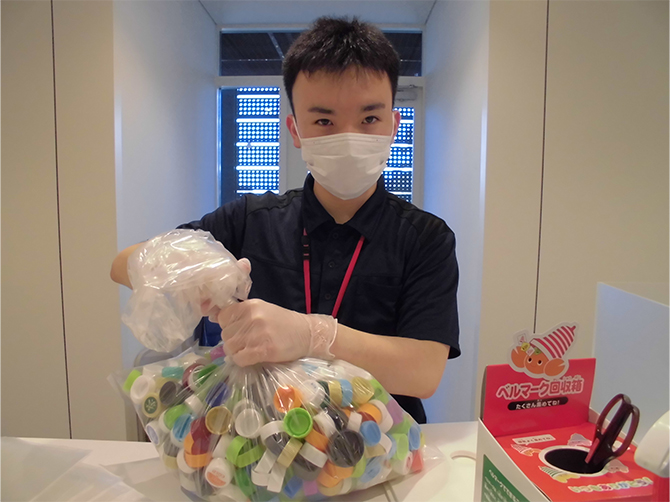
Recovery Results for Fiscal Year 2025
| weight | Quantity | Donations received | Number of people vaccinated |
|---|---|---|---|
| 457.41kg | 196,683 pieces | 4,569 yen | 228.45 people |
School Uniform Reuse Activities
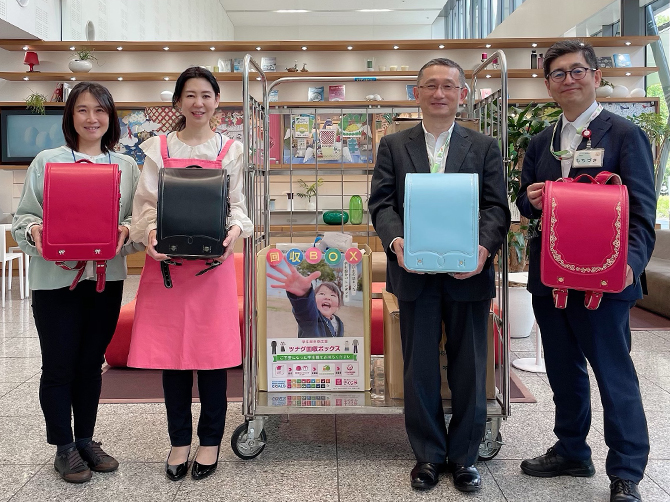
Since 2020, we have been participating in the school uniform reuse activities of "Sakuraya School Uniform Reuse Shop" to help families and children who are unable to purchase school uniforms and school supplies for various reasons.
Kewpie Group temporarily set up collection boxes at Sengawa Kewport and the Shibuya office to collect uniforms.